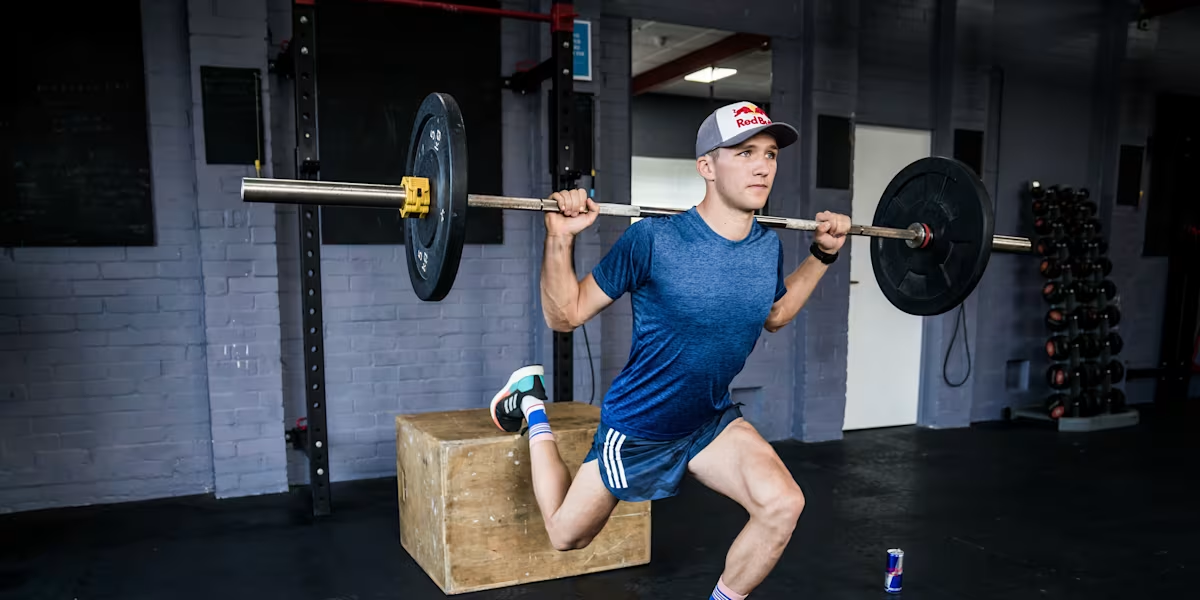
Walk into almost any commercial gym and the same scene plays out repeatedly. One section of the room is filled with people moving heavy barbells, pushing their limits, and breathing hard between sets. Another section is filled with people holding small dumbbells, performing endless repetitions while hoping the burn they feel is turning into muscle. Both groups are working, but the results they achieve often look very different.
The idea that light weights can build serious muscle has floated around the fitness world for years. It sounds appealing because it promises growth without the intimidating effort that heavier training demands. Unfortunately, real muscle rarely appears from comfortable workouts. Muscle responds to stress, challenge, and resistance that forces the body to adapt.
Over time, I started noticing a pattern that became impossible to ignore. The people who built impressive physiques were rarely the ones lifting tiny dumbbells for high repetitions. The individuals who consistently gained size and strength were pushing heavier loads, progressing week after week, and demanding more from their bodies than the week before.
This doesn’t mean light weights have absolutely no role in training. They can serve a purpose in warm-ups, rehabilitation, or specific endurance work. However, pretending they are the primary driver of serious muscle growth only creates confusion for people who genuinely want results.
The Reality of Muscle Growth
Muscle does not grow simply because it feels tired. Real growth happens when muscle fibers are forced to adapt to mechanical tension that exceeds what they are used to handling. That tension is created most effectively when resistance challenges the muscle close to its limit.
Heavy resistance creates microdamage in muscle fibers, which the body repairs and rebuilds stronger. This process is part of what many lifters refer to as progressive overload. Each time the body recovers from a challenging workout, it prepares itself to handle similar stress in the future.
Light weights can create fatigue, but fatigue alone does not guarantee the level of mechanical tension required for meaningful hypertrophy. A set of very light dumbbells may burn intensely after thirty repetitions, yet the actual force placed on the muscle fibers remains relatively low. That difference matters more than most people realize.
Watching experienced lifters train makes this principle clear. Their workouts revolve around compound movements and challenging loads that demand focus and effort. They are not chasing endless repetitions with tiny weights because they understand the stimulus their muscles actually require.
Why Light Weights Feel So Convincing
Part of the confusion comes from the sensation light weights produce. High repetition sets create a burning feeling that many people associate with muscle growth. That burn is often caused by metabolic stress and the buildup of byproducts within the muscle.
Metabolic stress can contribute to hypertrophy, but it is not the primary driver of large increases in muscle size. The sensation can be misleading because it feels intense even when the actual mechanical load is minimal. Many people walk away from those workouts feeling like they accomplished something significant.
Another reason light weights remain popular is comfort. Heavy training demands mental commitment and physical effort that can feel intimidating. It requires bracing the core, controlling challenging movements, and pushing close to failure.
Light weights remove much of that discomfort. The workouts feel safer, easier to recover from, and less mentally taxing. Unfortunately, easier workouts rarely produce the dramatic changes people expect.
What Heavy Training Actually Does
Heavy training changes the way muscles behave. When the body faces greater resistance, it recruits more motor units to generate the required force. These motor units control muscle fibers, and activating more of them increases the potential for growth.
This recruitment pattern is one of the key reasons heavier resistance is so effective. The body does not engage all available muscle fibers during light activity. It saves the stronger fibers for situations that demand real force.
Training with heavier loads forces those powerful fibers to contribute. Over time, those fibers grow thicker and stronger as the body adapts to the repeated demand. That adaptation is what people see when muscle size begins to increase.
The process also strengthens connective tissue and improves overall strength capacity. As strength improves, the amount of resistance that can be handled in future workouts increases as well. That cycle creates a continuous opportunity for growth.
Progressive Overload Changes Everything
Muscle growth thrives on progression. A workout that challenges the body today eventually becomes normal if the resistance never increases. Without progression, the body has no reason to continue adapting.
Heavy training naturally supports progressive overload. Increasing the weight on a barbell or adding extra resistance to a movement creates a clear signal that the muscles must become stronger. Even small increases can accumulate into significant changes over time.
Light weight routines often struggle with this principle. Adding more repetitions does not always increase the mechanical tension placed on the muscle. At some point, the body simply becomes more efficient at performing the movement.
Progressive overload does not mean lifting recklessly heavy weights every session. It means gradually increasing the demand placed on the muscles through weight, repetitions, sets, or intensity techniques. The key factor is that the stimulus must evolve over time.
The Illusion of the Endless Pump
Many workouts built around light weights chase one main goal: the pump. Muscles swell with blood during high repetition training, creating a temporary feeling of fullness. The sensation looks impressive in the mirror, and for a moment it can feel like real progress.
The problem is that pumps fade quickly. Within an hour or two, the muscles return to their normal state. Without sufficient mechanical tension during the workout, that temporary swelling does not necessarily translate into long-term growth.
Heavy training produces pumps as well, but the stimulus behind them is different. The muscles experience both mechanical tension and metabolic stress. That combination creates a stronger signal for adaptation.
The difference becomes obvious over months of consistent training. The pump-focused routines often stall, while progressive heavy training continues producing visible changes.
Strength and Muscle Are Closely Connected
Strength and muscle size share a strong relationship. Larger muscles generally have the capacity to produce greater force. While strength can increase through neural adaptations, long-term strength gains almost always involve muscle growth.
Heavy resistance training encourages both outcomes simultaneously. The nervous system becomes more efficient at recruiting muscle fibers, and the fibers themselves grow thicker to handle the workload.
Light weights can improve muscular endurance, but endurance does not always translate into large increases in muscle size. A person might perform dozens of repetitions with a small dumbbell without significantly increasing the size of their muscles.
Strength training creates a different trajectory. As strength rises, the loads used in training increase as well. Each new level of strength brings a new stimulus that encourages further growth.
The Psychological Side of Heavy Training
Heavy training demands a different mindset. Approaching a challenging set requires focus, commitment, and a willingness to push past comfort. That mental engagement often becomes one of the most valuable parts of the process.
Each successful lift builds confidence. The body proves that it can handle resistance that once felt intimidating. Over time, that confidence extends beyond the gym and influences how other challenges are approached.
Light weight routines rarely create the same psychological shift. Without the pressure of a truly demanding lift, the mental aspect of training remains relatively calm. While that environment can be enjoyable, it does not cultivate the same resilience.
Heavy lifting teaches patience as well. Progress happens gradually, and each small improvement represents consistent effort over weeks and months. That process reinforces discipline in a way few quick-fix routines can replicate.
Where Light Weights Actually Fit
Dismissing light weights entirely would ignore their legitimate uses. They can serve as valuable tools when used in the right context. Warm-up sets, mobility work, and rehabilitation exercises often rely on lighter resistance to prepare the body for more demanding work.
Accessory movements also benefit from lighter loads in some cases. Isolation exercises targeting smaller muscle groups may require reduced resistance to maintain proper form and control. These movements support larger compound lifts and help address weaknesses.
Light weights can also play a role during high-volume phases of training. Short periods focused on metabolic stress can complement heavier training blocks and provide variety. The key difference is that these phases support a larger plan rather than replacing it entirely.
When light weights are treated as the primary method for building muscle, progress often slows dramatically. When they support heavier work, they become far more useful.
Technique Still Matters With Heavy Loads
Heavy training should never come at the expense of technique. Moving large amounts of weight with poor form reduces the effectiveness of the exercise and increases the risk of injury. Precision and control remain essential regardless of the load.
Each repetition should reflect deliberate movement patterns that engage the intended muscles. Rushing through lifts or relying on momentum shifts the stress away from the target areas. Quality repetitions consistently outperform sloppy heavy lifts.
Progression should also happen gradually. Jumping too quickly to heavier loads can overwhelm joints and connective tissue that have not yet adapted. Building strength step by step creates a foundation that supports long-term development.
When heavy training is combined with disciplined technique, the results become far more reliable. Muscles respond to consistent tension delivered through controlled movement patterns.
Why the Industry Keeps Promoting Light Weights
Fitness trends often prioritize accessibility and comfort because they appeal to a larger audience. Light weight workouts appear friendly and unintimidating, making them easier to market to beginners. Programs promising muscle growth without heavy lifting naturally attract attention.
Group fitness classes frequently rely on lighter weights as well. Managing large groups safely becomes simpler when participants are not handling heavy loads. While these classes can improve general fitness, they rarely produce dramatic muscle development.
Social media also amplifies these trends. Short videos of quick, high-rep routines spread easily because they appear simple and approachable. The deeper principles behind muscle growth rarely fit into a thirty-second clip.
That environment allows misconceptions to survive longer than they should. Real muscle development requires effort that cannot always be packaged into a convenient trend.
A Training Approach That Actually Builds Muscle
A productive training plan revolves around compound movements and progressive resistance. Exercises like squats, presses, rows, and deadlifts involve multiple muscle groups working together to move challenging loads. These movements create the foundation for substantial growth.
Accessory exercises complement those primary lifts by targeting specific muscles that support the larger movements. The combination ensures balanced development while still prioritizing the lifts that generate the greatest stimulus.
Recovery also plays a crucial role in the process. Heavy training places significant stress on the body, and adequate sleep, nutrition, and rest days allow muscles to rebuild stronger. Ignoring recovery eventually limits progress regardless of how hard someone trains.
Consistency remains the most powerful factor of all. A well-structured program followed for months will outperform scattered workouts that change direction every week.
Final Thoughts
The debate surrounding light weights and muscle growth often misses the bigger picture. Light resistance has its place in training, but it rarely serves as the main driver of serious muscle development. Real growth typically appears when muscles face resistance that challenges their current capacity.
Heavy training creates the mechanical tension necessary for hypertrophy while encouraging progressive overload. The body responds by recruiting more muscle fibers, strengthening connective tissue, and building the size required to handle greater loads.
The message is not about ego lifting or reckless intensity. It is about acknowledging what the body truly needs to adapt. Muscles grow when they are pushed beyond their comfort zone and given the opportunity to recover stronger.
Pretending that light weights alone can deliver the same results only delays progress. Accepting the reality of resistance training opens the door to the kind of transformation many people spend years chasing without ever fully achieving.
